Addition Teaching Materials: Crafting Educational Resources That Resonate in the Digital Publishing Era
The landscape of early childhood education is undergoing a quiet yet profound transformation. Parents, educators, and caregivers are no longer satisfied with generic worksheets or one-size-fits-all math drills. They seek resources that are intentional, visually coherent, and pedagogically sound. Within this shifting environment, Addition Teaching Materials have emerged as a staple category for Amazon KDP publishers and content creators who understand that effective learning tools must balance structure with engagement. But what exactly constitutes high-quality addition teaching materials in today's market, and why has this niche become a focal point for independent publishers, freelance educators, and edtech enthusiasts alike?
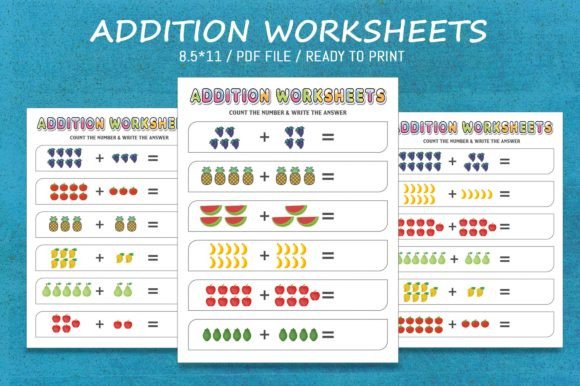
At its core, addition teaching materials refer to structured, printable resources designed to help young learners grasp foundational arithmetic concepts through repeated practice and guided activity. These materials typically include number bonds, vertical and horizontal addition problems, missing addends, picture-supported sums, and progressive difficulty levels that scaffold a child’s understanding from concrete to abstract. The particular interior specification described—a 10-page, 8.5×11 inch, no-bleed PDF and JPG file set, ready for Amazon KDP upload—represents a streamlined approach to content creation that prioritizes both print quality and digital accessibility. For the entrepreneur or creator looking to enter the low-content and medium-content book market, this format offers a repeatable, scalable template that meets Amazon’s exacting upload standards without requiring advanced design expertise.
The Convergence of Educational Needs and Publishing Efficiency
The demand for addition teaching materials is not arbitrary. It reflects a broader societal shift toward personalized, at-home learning supplementation. Post-pandemic educational patterns have normalized the expectation that parents and guardians play an active role in numeracy development. Many families now seek resources that align with school curricula yet offer the flexibility of self-paced practice. This is where the KDP-ready interior format becomes a strategic advantage. A set of ten well-designed pages—each with a clear layout, ample white space, and progressively arranged problems—can serve as both a standalone workbook and a supplementary resource for classroom teachers or homeschooling parents.
What makes this particular interior specification noteworthy is its intentional minimalism. With ten pages and no bleed, the creator eliminates common print production headaches such as content being cut off during trimming or excessive file sizes that slow down Amazon’s review process. The inclusion of both PDF and JPG files further broadens the utility: the PDF ensures crisp, vector-quality printing, while the JPG files allow for quick previews, digital distribution, or use in tablet-based learning apps. For the creator—whether a seasoned KDP veteran or a newcomer exploring educational niches—this dual-format approach reduces friction and accelerates time-to-market, a critical factor in a competitive category where relevance can shift with curriculum updates and seasonal buying patterns.
Why Addition Teaching Materials Are Gaining Attention
Educational content sits at a unique intersection of evergreen need and evolving delivery methods. Addition, as a core arithmetic operation, is non-negotiable in early learning. Yet the market has moved beyond simple drill sheets. Today’s parents and educators evaluate materials based on several criteria that directly influence purchasing decisions: visual clarity, developmental appropriateness, alignment with standards such as Common Core or Montessori principles, and the tangible quality of the final printed product. An interior that is expressly prepared for KDP—with the correct dimensions, no-bleed margins, and high-resolution file output—addresses the unspoken concern that many self-published educational books fail to meet professional print standards.
Moreover, there is a growing recognition that Addition Teaching Materials serve dual purposes. For the child, they provide the repetition necessary to build automaticity in math facts. For the adult facilitator, they offer a ready-made structure that removes the cognitive load of lesson planning. This dual utility is a powerful value proposition. A parent who downloads a ten-page addition workbook at 8:00 PM does not want to spend thirty minutes deciphering a cluttered layout or correcting alignment issues. They want a clean, usable resource that requires nothing more than a printer and a pencil. The interior format described here delivers precisely that experience, and that reliability builds trust—an essential currency in the educational market.
Practical Observations from the Classroom and Home
Consider a common scenario: a kindergarten teacher prepares weekly math stations for her students. She needs multiple copies of worksheets that are consistent in format, appropriately leveled, and easy to read for emerging readers. A well-structured addition teaching interior allows her to print a set of pages that progress from sums within five to sums within ten, with visual supports such as ten-frames or number lines integrated into the layout. Similarly, a stay-at-home parent supporting a first grader who struggles with math anxiety may prefer a workbook that does not overwhelm the child with dense pages. The ten-page constraint, when used artfully, becomes a feature rather than a limitation. It signals to the buyer that the content is focused, manageable, and designed for short, effective practice sessions rather than marathon worksheets that lead to frustration.
From a production standpoint, the no-bleed 8.5×11 inch format is a pragmatic choice. It ensures compatibility with standard home printers and eliminates the need for professional trimming. For the KDP publisher, this means fewer returns due to printing defects and a smoother approval process. The PDF file, optimized for Amazon’s upload system, embeds fonts and maintains consistent margins, while the JPG files serve as fallback assets for marketing materials or digital previews on the product page. This dual-file strategy is a best practice that seasoned KDP sellers employ to maximize their listing’s discoverability and conversion rate.
Connecting Addition Materials to Larger Industry Trends
The rise of addition teaching materials within the KDP ecosystem is part of a broader movement toward micro-content in educational publishing. Rather than producing massive, comprehensive textbooks that take months to develop, creators are increasingly releasing focused, short-form workbooks that address specific skills. This trend aligns with consumer behavior in the digital age: buyers prefer targeted resources that solve immediate problems without excess fluff. A ten-page addition workbook fits neatly into this paradigm. It is affordable, low-risk for the buyer, and easy for the creator to iterate upon based on customer feedback and sales data.
This approach also reflects a shift in how educators and parents discover content. Search queries on Amazon have become more specific: “addition within 10 worksheets,” “kindergarten math practice,” or “no-prep addition activities.” By creating an interior that is laser-focused on addition and formatted precisely for Amazon’s specifications, the publisher increases the likelihood of ranking for these high-intent search terms. The semantic coherence of the title, description, and interior content signals relevance to Amazon’s algorithm, which in turn improves organic visibility.
Changing Workflows for Content Creators
For the freelancer or entrepreneur building a portfolio of educational resources, the ability to produce a KDP-ready interior without bleed and with multiple file formats represents a significant workflow advantage. Traditional print layout required careful attention to trim marks, gutter margins, and color profiles. The no-bleed specification simplifies the entire process. A creator can design the interior in tools like Canva, Adobe InDesign, or even Microsoft Word, confident that the output will meet Amazon’s standards. This lowers the barrier to entry for individuals who possess content expertise—such as a former elementary teacher or a math tutor—but lack formal graphic design training.
Furthermore, the inclusion of JPG files alongside PDFs opens possibilities beyond print. Educators increasingly use digital platforms such as Google Classroom, Seesaw, or tablet-based apps to distribute worksheets. A high-resolution JPG can be inserted into a digital lesson plan or uploaded directly to a learning management system. This hybrid print-digital utility extends the lifespan of the content and broadens its addressable audience. The creator who adopts this dual-format approach future-proofs their catalog against the continued digitization of education.
Quality Signals That Drive Buyer Confidence
In the competitive landscape of KDP educational books, small quality indicators have outsized effects on customer trust. A product description that explicitly states “No Bleed” and “8.5×11 Inches” signals to the informed buyer that the interior has been prepared with professional print standards in mind. Parents who have purchased poorly formatted workbooks in the past recognize these details and are more likely to convert. Similarly, specifying that the file includes both PDF and JPG formats communicates transparency and readiness—the buyer knows exactly what they are getting and how they can use it.
For the content creator, these specifications also operationally de-risk the publishing process. A no-bleed interior eliminates the need for complex file adjustments based on the book’s page count or trim size. The 10-page count keeps file sizes small, reducing upload times and the likelihood of processing errors. And because the interior is ready for KDP, the creator can focus energy on the cover design, keyword optimization, and marketing strategy—elements that directly drive sales.
Practical Examples of Effective Use
Imagine a creator who develops a series of math workbooks for kindergarten through second grade. Each workbook in the series follows the same 10-page, 8.5×11, no-bleed template, with the only variable being the skill focus: addition, subtraction, place value, or time telling. The consistency of the interior format means that once the first book is approved by KDP, subsequent titles require minimal rework. The creator can reuse the same file structure, margins, and font choices while swapping out the content. This systematic approach accelerates catalog growth and allows the creator to respond quickly to market trends—for instance, launching an addition workbook during back-to-school season or a summer math review packet in June.
Another example: a freelance educator creates addition teaching materials for her tutoring practice. She prints the PDFs for her in-person students and also sells the same files on Teachers Pay Teachers and Amazon KDP simultaneously. The JPG versions become thumbnails for her online listings, and the PDFs serve as the primary product. By maintaining a single source file that outputs multiple formats, she saves hours of rework and ensures that her brand remains consistent across platforms. Her clients recognize the clean, professional layout and associate it with high-quality instruction.
Conclusion: Relevance in a Shifting Educational Landscape
Addition teaching materials are not merely a commodity product in the KDP marketplace. They represent a thoughtful intersection of educational best practices and independent publishing efficiency. The specific interior specification described—10 pages, 8.5×11 inches, no bleed, with PDF and JPG files ready for Amazon upload—encapsulates a set of design and production decisions that prioritize usability, scalability, and quality. For professionals, creators, entrepreneurs, marketers, freelancers, and enthusiasts, understanding the strategic value of such a format is essential for building a sustainable educational content business.
As the expectations of parents and educators continue to evolve, the creators who will thrive are those who respect the end user’s time and need for clarity. A well-crafted set of addition teaching materials does more than teach math facts. It communicates that the creator understands the realities of the classroom and the home. It builds trust through precision. And in a market where first impressions are often the only impression, that trust is the most valuable asset a publisher can cultivate.