Evaluating the My Name Writing Worksheet for PreK: Practical Value for Early Literacy and Fine Motor Development
When you are working with preschool-aged children, the tools you choose for early writing instruction can shape their attitude toward learning for years to come. The My Name Writing Worksheet for PreK is a resource designed to address several foundational skills simultaneously: fine motor control, letter recognition, and the confidence that comes from being able to write one's own name. This article offers a practical evaluation of what this worksheet set includes, how it performs in real classroom and home settings, and which educators, parents, or caregivers may find it most useful.
What the My Name Writing Worksheet for PreK Offers
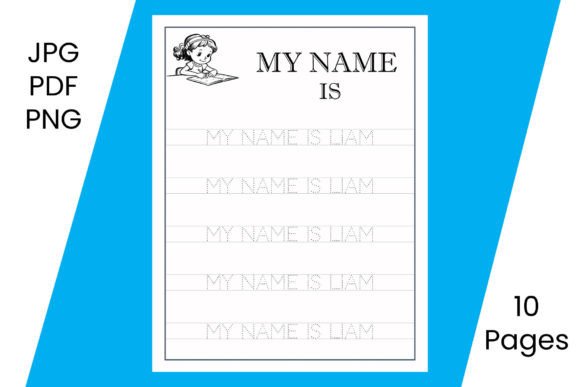
At its core, this product is a set of customizable name tracing sheets aimed at preschool and early kindergarten learners. The interior includes ten PDF pages, ten JPG pages, and ten PNG pages, all formatted at 8.5 by 11 inches with 300 dpi resolution. The files are black and white, contain no bleed, and are ready for immediate printing. They have also been tested for compatibility with Amazon KDP, meaning that if you are a publisher or content creator looking to repurpose or sell this type of material, the technical specifications are already verified.
The distinguishing feature here is the emphasis on customization. Rather than offering generic preprinted names, the worksheet set is designed so that you can input a specific child's name, creating a personalized tracing experience. This approach directly supports the developmental goals of letter recognition and fine motor practice because the child is working with letters that carry personal meaning.
Core Strengths: Fine Motor Skills, Letter Recognition, and Motivation
The three primary areas this worksheet targets are fine motor development, letter identification, and writing fluency. Let us examine each in turn.
Fine Motor Skill Development
Tracing activities require a child to control a pencil or crayon along a defined path. This repeated motion strengthens the small muscles in the hand and wrist, improves hand-eye coordination, and builds the pencil grip necessary for later writing tasks. The My Name Writing Worksheet for PreK provides structured tracing lines that guide the child without being overly restrictive. The black and white design also means that after tracing, the child can color the letters, adding an additional layer of fine motor work.
Letter Recognition Through Personal Relevance
One of the more thoughtful aspects of this resource is its use of the child's own name. Research in early childhood education consistently shows that children are more engaged when learning materials relate directly to their identity. A worksheet that displays their name in clear, traceable letters encourages them to study each character individually. Over repeated sessions, they begin to recognize the sequence of letters that form their name, and this recognition often transfers to other words and contexts.
Building Confidence and a Sense of Ownership
The product description highlights that personalized worksheets promote pride and motivation. This is not a trivial benefit. For a preschooler, being able to write their own name is a significant milestone. When the worksheet is uniquely theirs, they tend to treat the activity with more care and enthusiasm. This emotional connection can reduce resistance to practice and make the learning process feel more like a personal achievement than a chore.
Practical Usability and Format Considerations
From a usability standpoint, the My Name Writing Worksheet for PreK offers several practical advantages that merit attention.
File Variety and Cross-Platform Compatibility
Having access to PDF, JPG, and PNG formats means that you are not locked into a single workflow. The PDF version is ideal for printing multiple copies with consistent formatting. The JPG and PNG files allow for digital manipulation, such as inserting the child's name using image editing software or importing the sheets into tablet-based drawing apps. This flexibility is especially useful for educators who want to integrate the worksheets into digital learning platforms or for parents who prefer to use a stylus and tablet instead of paper.
Print-Ready Specifications
The 300 dpi resolution ensures that printed lines are crisp and clear, which matters when young children are learning to trace. A blurry or pixelated tracing line can cause confusion and frustration. The no-bleed design also simplifies printing at home or in a school setting, as you do not need special paper or margin adjustments. The standard 8.5 by 11 inch size fits easily into most printers and binders.
Black and White Design
While some educators prefer colorful worksheets, the black and white format here has a practical justification. It keeps printing costs low, allows children to personalize the sheets with their own coloring, and reduces visual distractions. For a tracing activity, a clean, uncluttered page is often more effective than a busy, colorful one.
Real-World Performance and Limitations
To give a balanced assessment, it is important to consider how this worksheet set performs in actual use and where its limitations lie.
Effectiveness in the Classroom
In a preschool or kindergarten setting, the personalized nature of these worksheets can save teachers significant preparation time. Instead of handwriting each child's name onto a template, you can type the names once and print the entire set. This efficiency is valuable in classrooms with fifteen to twenty students. Teachers have reported that children respond positively to seeing their own names on worksheets, and the tracing format provides a predictable structure that young learners appreciate.
However, the product includes only ten pages per purchase. For a classroom of twenty students, you would need multiple copies or a license that permits reproduction. If you are a publisher or seller, this limitation is worth noting in your product description so that buyers understand the scope.
Home Use and Parent Engagement
For parents working with a single child, ten pages may be sufficient for several weeks of practice, especially if you rotate the sheets or use them as part of a broader learning routine. The ability to reuse the files by printing new copies as needed is a practical advantage. Parents who want to track progress can also print a fresh sheet each week and compare the child's tracing quality over time.
One limitation is that the worksheets do not include instructional guidance for parents. If you are new to teaching writing, you may need to research proper pencil grip techniques or letter formation sequences separately. The product is a tool, not a curriculum, and its effectiveness depends on how it is integrated into a larger learning plan.
Customization Process
The worksheets are described as editable, but the ease of editing depends on the software you use. PDF editing tools such as Adobe Acrobat or free alternatives like Canva and Inkscape work well, but the process is not instant. If you are preparing a large batch of worksheets, you will need to allocate time for editing each name. For a single child, this is a minor task. For a full classroom, it requires more upfront effort, though the time saved later usually balances this out.
Who Benefits Most from This Resource
Based on the design and features, the My Name Writing Worksheet for PreK is best suited for specific audiences and scenarios.
Preschool and Kindergarten Teachers
Educators who work with children aged three to five will find these worksheets useful for daily writing centers, morning work, or take-home practice. The personalization aspect helps manage diverse skill levels within a single classroom, as each child works with their own name. Teachers who emphasize a print-rich environment will appreciate the ability to display completed worksheets on bulletin boards or in student portfolios.
Homeschooling Parents and Caregivers
For parents teaching writing at home, the worksheets offer a structured yet flexible resource. You can use them as a standalone activity or combine them with other alphabet and phonics materials. The editable format also allows you to create sheets for siblings or for practice with other important words, such as family names or simple sight words.
Content Creators and Small Publishers
If you are developing educational materials for Teachers Pay Teachers, Etsy, or Amazon KDP, this interior provides a tested template that can be adapted and resold. The KDP-compatible specifications save you technical troubleshooting time. However, you should verify the licensing terms of the original product before republishing. The description suggests it is ready for Amazon KDP, but you will want to confirm whether the customization rights extend to commercial redistribution.
Long-Term Value and Practical Recommendations
When evaluating any educational resource, long-term value is a key consideration. The My Name Writing Worksheet for PreK scores well in terms of reusability. Because the files are digital, you can print fresh copies whenever needed, and the editable nature means you can reuse the template for different names across multiple school years or for siblings.
To get the most out of these worksheets, consider the following recommendations:
- Pair tracing with verbal practice. While the child traces each letter, say the letter name aloud. This reinforces the connection between the visual symbol and its spoken form.
- Use a variety of writing tools. Crayons, markers, colored pencils, and even finger tracing in sand or shaving cream can complement the worksheet practice and keep the activity fresh.
- Create a name tag version. As noted in the product description, the worksheets can be transformed into editable name tags for classroom activities. Print on cardstock, cut out the traced names, and laminate them for use on desks, cubbies, or job charts.
- Rotate the worksheets. With ten unique pages, you can assign a different sheet each week or use them as a rotation station. This prevents boredom while maintaining the learning focus.
- Monitor progress. Keep a dated folder of completed worksheets. Over a period of weeks, you will see visible improvement in letter formation, line control, and neatness.
Final Thoughts on the My Name Writing Worksheet for PreK
The My Name Writing Worksheet for PreK is a straightforward, functional resource that addresses the core needs of early writing instruction without unnecessary complexity. Its strengths lie in personalization, practical print specifications, and a clean design that supports fine motor and literacy development. For teachers, homeschooling parents, and content creators, it offers a reliable foundation that can be adapted to various learning contexts.
The product is not a full curriculum, and it does not claim to be. It performs best when used as part of a broader approach that includes direct instruction, multisensory practice, and consistent encouragement. If you are looking for a tool that respects the developmental stage of a preschooler while giving you the flexibility to customize and reuse, this worksheet set merits consideration.
For those who wish to explore further, the publisher offers additional products and encourages following their store for updates. As with any educational purchase, the ultimate test is whether it fits your specific teaching style and the needs of the child. Based on the features and performance in typical use, the My Name Writing Worksheet for PreK delivers practical value at a reasonable investment of time and resources.