2024 Pet Care Planner Canva Kdp: What Most Owners Get Wrong and How to Fix It
Keeping track of your pet’s health, feeding schedule, vet appointments, and grooming needs can feel like a part-time job. Many owners start the year with good intentions—buying a planner, printing templates, or setting reminders on their phone—only to abandon the system by February. The problem isn’t a lack of love for your pet. It’s usually a mismatch between the planner you choose and how you actually live and work. The 2024 Pet Care Planner Canva Kdp offers a flexible, editable solution, but only if you avoid a handful of common missteps.
Mistake #1: Choosing a Static Planner When Your Needs Change
Many pet planners come as fixed PDFs or printed books. Once you fill in a page, that’s it. If your pet develops a new health condition, you start seeing a different vet, or you switch to a homemade diet, you’re stuck with outdated sections or blank pages that don’t fit your new reality. This is where the Editable 2024 Pet Care Planner Canva Interior shines—but only if you actually use its flexibility.
A static planner forces you to adapt to its structure. The editable Canva version lets you adapt the structure to your life. You can change text, colors, fonts, and layout style so the planner works for a senior dog with medication needs, a kitten with a vaccination schedule, or a multi-pet household with overlapping appointments. Don’t settle for a one-size-fits-all layout when you can tailor every page.
Mistake #2: Overlooking the “Belongs To” Page as a Mere Formality
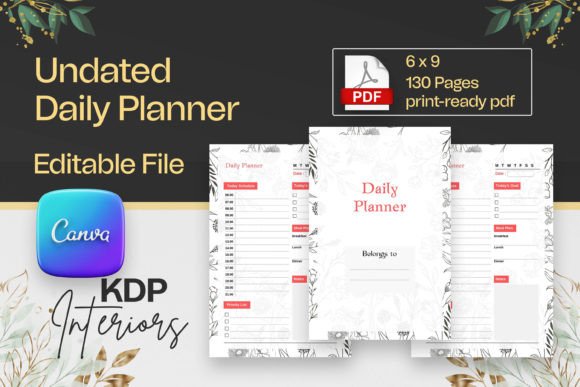
It’s easy to skip or rush through the Belongs to page. But that page serves a real purpose beyond decoration. If your pet ever goes missing, gets injured while with a pet sitter, or needs emergency care while you’re traveling, that front page is the first thing a vet or shelter will see. Treat it as an emergency contact cover sheet, not an afterthought. Include your phone number, an alternate contact, and your vet’s name. The editable format in the 2024 Pet Care Planner Canva Kdp allows you to update this information instantly if you change jobs, move, or switch clinics.
Mistake #3: Ignoring the Symptom Tracker Until Something Goes Wrong
Most people flip straight to the Appointment Calendar or Feed Schedule and ignore pages like the Symptom Tracker or Weight Loss Tracker. That’s understandable—you don’t want to think about your pet getting sick. But by the time symptoms become obvious, you’ve already lost valuable data. A subtle limp, a day of reduced appetite, or a slight change in thirst can be early signs of something serious.
Use the Symptom Tracker weekly, even if your pet seems healthy. Note any small changes. Over time, you’ll build a baseline that helps your vet make faster, more accurate diagnoses. The same logic applies to the Weight Loss Tracker. Gradual weight changes are easy to miss when you see your pet every day. A simple weekly log catches trends early.
Mistake #4: Treating the Vaccination Record as a One-Time Entry
Vaccination records are easy to misplace, especially when you rely on paper forms from the vet. The Vaccination Record in this planner is more useful if you treat it as a living document. Enter each vaccine with the date given, the batch number, and the next due date. Then, set a recurring reminder to review it. The same applies to the Heartworm Record. Missing a monthly preventive dose by even a week can leave your pet unprotected. Keep the record current and cross-reference it with your Preventive Treatment log.
Mistake #5: Using the Expenses Log Only for Large Purchases
Pet expenses add up in small increments—a bag of treats, a new leash, an extra vet copay, a grooming tip. If you only log big-ticket items like surgery or a new bed, your Expenses Log and Pet Expenses Overview will give you a misleading picture of your actual spending. That makes budgeting harder and can lead to surprises when annual costs are higher than expected.
Log every pet-related purchase, no matter how small. Over a year, those five-dollar items accumulate. The Pet Shopping List and Supplies Inventory pages help you track what you already own so you avoid buying duplicates. If you budget carefully, you can allocate funds toward better food, more frequent vet visits, or emergency savings.
Mistake #6: Failing to Coordinate with Your Pet Sitter
The Pet Sitter Information and Petsitter Schedule pages are often filled out in a hurry before a trip. That’s a recipe for miscommunication. Sitters need clear instructions on feeding times, medication doses, walking routes, and emergency contacts. If you fill these pages out when you’re rushed, you might forget to note that your dog can’t have a certain treat or that your cat hides during thunderstorms.
Complete these sections a week before any trip. Review them with your sitter in person or over video call. The editable Canva format means you can print a fresh copy for each sitter without starting from scratch. Include details from the Feed Schedule, Medication Tracker, and General Pet Overview Information so nothing gets left out.
Mistake #7: Overcomplicating the Daily and Weekly Sections
The Daily Pet Planner, Weekly Pet Journal, and Monthly Pet Journal are powerful tools, but they can become overwhelming if you try to fill every box. Don’t treat them as a chore. Use them as a quick check-in. The Daily Pet Planner might only need three entries: food given, any unusual behavior, and whether medication was administered. The Weekly Pet Journal can capture one or two highlights or concerns. Leaving sections blank is fine—consistency matters more than completeness.
If you find yourself skipping days, simplify. Reduce the number of fields you track. The editable nature of the 2024 Pet Care Planner Canva Kdp means you can remove columns or combine categories. The goal is a log you actually maintain, not a perfect document you abandon.
Mistake #8: Neglecting the Grooming and Dog Walking Trackers
Grooming and exercise are easy to deprioritize when life gets busy. The Grooming Tracker and Dog Walking Tracker serve as gentle accountability tools. Without them, it’s common to realize your dog hasn’t had a proper walk in three days or that nail trimming is overdue by weeks. These pages help you spot patterns—maybe you walk less on certain days of the week, which lets you plan ahead.
Use the Dog Walking Tracker to note distance, duration, and weather. Over time, you’ll see if your dog’s energy levels change with the season or if a certain route seems to cause discomfort. The Grooming Tracker should include brushing sessions, baths, nail trims, and ear cleaning. Regular logs help you catch skin issues or matting before they become painful.
Mistake #9: Forgetting That the Planner Is a System, Not a Collection of Pages
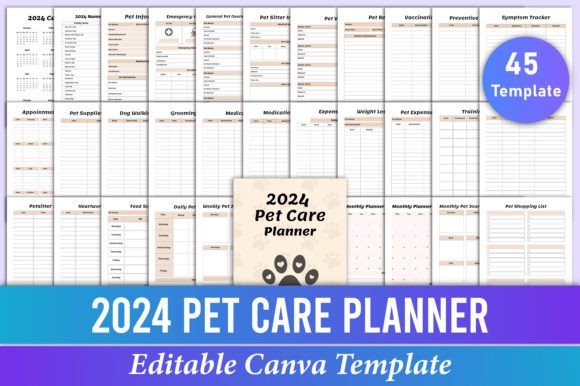
Many people print the entire 45 Canva Template set and treat each page as an independent document. That leads to scattered information—feeding records in one place, vet notes in another, expenses in a third. The real value comes from cross-referencing. When your pet has a health issue, you can check the Symptom Tracker, Medication Tracker, Feed Schedule, and Training Log together to spot connections. For example, a behavior change might correlate with a new food or a missed dose.
Keep all pages in one binder or digital folder. Use tabs or dividers for sections like Emergency Information, Preventive Treatment, and Monthly Planner Jan-Dec. When you visit the vet, bring the relevant pages—Vaccination Record, Medications, Symptom Tracker—so the doctor has a complete picture.
Mistake #10: Ignoring the Editable Canva Link After the First Use
The product includes an Editable Canva Link along with High-Quality Ready PDF Files, JPG Files, and PNG Files. Some owners use the PDFs directly and never revisit the Canva templates. That defeats the main advantage. Revisit your planner quarterly. Update colors, fonts, or layout as your pet’s needs change. Add new sections if you start a new training regimen or introduce a supplement. The Trim size 8.5x11 Inches and CMYK Color 300 DPI settings ensure print quality, but the real power is the ability to evolve the planner throughout 2024.
If you’re not comfortable with design, start with the default layout and make small adjustments. Change the color of the Feed Schedule to match your pet’s food brand, or add a custom field to the Training Log for specific commands. Over the year, your planner will become a personalized record that no pre-printed book can match.
What to Check Before You Start
Before you print or edit the 2024 Pet Care Planner Canva Kdp, take fifteen minutes to review the full template list. Identify which pages you’ll use weekly, which you’ll use monthly, and which are for emergencies only. Decide where you’ll store physical copies—a binder, a folder, or a clipboard. For digital use, keep the Canva link accessible and back up your edited files.
If you manage multiple pets, print separate sets of core pages—Pet Information, Emergency Information, Medication Tracker, and Feed Schedule—for each animal. Shared pages like Expenses Log, Supplies Inventory, and Pet Shopping List can cover the whole household. Label everything clearly to avoid confusion.
A Better Approach for Long-Term Success
The best pet planner is the one you actually use. The 2024 Pet Care Planner Canva Kdp gives you the flexibility to build a system that fits your life, your pet’s needs, and your schedule. Avoid the common mistakes of treating it as a static book, ignoring the symptom and expense logs, and failing to coordinate with sitters. Instead, embrace the editable nature, keep records consistently but simply, and review your system every few months.
Your pet’s health and happiness depend on small, daily actions that add up over time. A well-managed planner doesn’t just organize information—it helps you stay proactive, spot problems early, and make informed decisions. With the right approach, you’ll look back at the end of 2024 with a complete, useful record of your pet’s care, and a system you can carry into the next year.