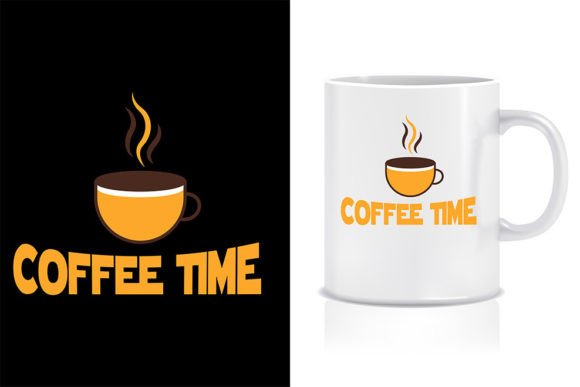
Coffee Time Mug Design: A Versatile Graphic for Every Project
You know that moment when you're browsing through design assets and something just clicks? That's exactly what happened when I first opened the Coffee Time Mug Design file from a small shop I'd been meaning to check out. What looked like a simple mug graphic turned into something I've now used across five different client projects. Let me walk you through why this particular design deserves a spot in your asset library and how you can put it to work across print, digital, and merchandise projects.
What Makes This Design Stand Out
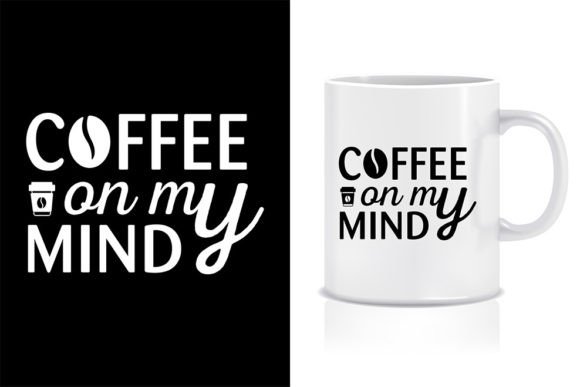
The Coffee Time Mug Design carries a warm, approachable personality that's surprisingly hard to find in commercial graphics. It leans into a handwritten style with enough structure to remain legible at small sizes, but keeps that loose, human touch that connects with audiences on an emotional level. The letterforms have a relaxed rhythm—slightly uneven baseline, varied stroke weights, and subtle flourishes that never feel forced. It's the kind of design that makes you think of lazy Sunday mornings and good conversation, which is exactly the mood most coffee-related branding tries to capture but often misses.
The design comes as both EPS and JPG files at high resolution, which means you're not locked into a single workflow. Whether you prefer vector editing in Illustrator or quick mockups in Photoshop, the file structure gives you flexibility. The EPS file preserves all the original paths, so changing colors or scaling the design for different products takes just a few clicks. That matters more than most buyers realize until they're halfway through a project and need to adjust something quickly.
Apparel and Merchandise Printing
This is where the design really earns its keep. On T-shirts, the handwritten style reads well across chest prints, small left-chest logos, and even larger back designs. I tested it on a medium-brown hoodie last month—cream-colored print—and the contrast worked beautifully. The design's open letterforms mean the ink doesn't blob together during screen printing, which is a common headache with more ornate scripts.
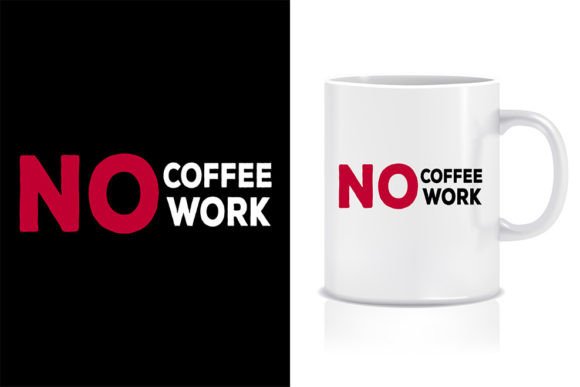
For mugs themselves, obviously, you'd think the design would be a natural fit, but it also performs well on pillows, tote bags, and even wall art. The key is the design's ability to scale. At two inches wide, it's a subtle accent. At eight inches, it becomes a statement piece without feeling stretched or pixelated, thanks to the vector source file.
KDP Interiors and Printable Decor
If you're publishing on KDP or selling printables on Etsy, this design works as a repeating pattern element, a chapter header accent, or a standalone cover graphic. I've seen it used effectively in coffee-themed journals, recipe books, and gratitude logs. The design's personality adds a consistent thread throughout the interior without overwhelming the actual content. For printable wall art, pairing the Coffee Time Mug Design with a clean sans serif font for secondary text creates a balanced composition that sells well in home decor niches.
Brand Identity and Small Business Projects
Local coffee shops, bakeries, and cafes often need branding that feels personal without looking amateur. This design fills that gap nicely. It has enough character to stand alone as a logo element but remains flexible enough to pair with other typography. I recently recommended it to a friend starting a cold brew subscription service, and she used it across her website hero section, product labels, and social media headers. The handwritten quality gave her brand a story before she'd even written her About page.
How the Design Influences Readability and Brand Perception
Let's talk about visual hierarchy for a second. When you place the Coffee Time Mug Design on a product, it naturally draws the eye because of its uneven, organic shapes. Our brains are wired to notice things that don't look mechanically perfect—it's why handwritten styles feel more trustworthy and approachable than rigid geometric fonts. For brand perception, this means your audience subconsciously registers warmth, authenticity, and a human touch before they've even read the words.
That said, readability depends on context. At very small sizes, like on a pen or a keychain, the finer strokes might lose definition depending on the printing method. But for most standard applications—mugs, tees, posters, packaging—the design holds up well. The key is testing the print at actual size before committing to a large run. I always recommend ordering a single proof piece, especially when the merchandise will carry your brand name.
Consistency across different products matters too. One advantage of having the EPS file is that you can lock the design's proportions and color palette, then apply it across a whole product line. This builds recognition fast. Think about how you spot a favorite brand's logo from across the room—that's the power of consistent visual identity. The Coffee Time Mug Design gives you that potential without requiring a custom typeface investment.
Evaluating Project Fit
Before you buy, ask yourself three questions. First, does the design's personality match the emotional tone of your project? If you're selling premium, minimalist coffee equipment, this handwritten style might feel too casual. But if you're branding a neighborhood café or a cozy subscription box, it's right on target. Second, will you need to modify the color frequently? If yes, the EPS file is essential. Third, what's your primary output medium? For digital-first projects like social media graphics, the JPG at high resolution works fine. For print-on-demand merchandise, you'll want the vector version.
Testing Font Pairings
The Coffee Time Mug Design works best when paired with a clean, neutral partner. A soft sans serif like Montserrat Light or a simple serif like EB Garamond gives the handwritten element room to breathe. Avoid pairing it with another script or display font—you'll lose the hierarchy and create visual noise. I usually set the design as the hero element and use the paired font for supporting text like taglines, ingredients, or pricing. This separation keeps the layout organized while letting the design's personality lead.
Commercial Licensing Considerations
Always check the license terms before using any design asset in commercial products. The Coffee Time Mug Design from this store allows you to use it on T-shirts, hoodies, mugs, pillows, bags, wall art, KDP interiors, clothing printing, and printable decorations. That covers most small business needs. However, if you're planning to sell the design itself as a standalone digital product or include it in a design template bundle for resale, you'll want to confirm whether that's covered under your license. Most single-use licenses don't allow that, and it's better to know upfront than deal with issues later.
Real-World Examples and Observations
I watched a friend launch a small ceramics brand last quarter. She used the Coffee Time Mug Design on her initial run of 200 mugs, screen-printed in a muted sage green. The design's handwritten feel matched the hand-thrown texture of her pottery perfectly. Within three weeks, she sold out and had to reorder. Was it solely because of the design? No—her product quality and photography did heavy lifting too. But the design gave her brand a consistent visual anchor that made her Instagram feed and website feel cohesive from day one.
On the flip side, I've seen someone use this same design on a line of tech accessories—laptop sleeves, phone cases, desk mats—and it felt mismatched. The warm, analog personality of the design clashed with the sleek, modern product category. Not because the design is bad, but because it wasn't the right tool for that job. That's the honest reality of working with design assets: fit matters more than quality.
Final Recommendations for Getting the Most Out of This Asset
If you decide to add the Coffee Time Mug Design to your toolkit, start with one or two product types and test the market before scaling. Use the vector file to experiment with color variations—try a dark roast brown on cream, a clean white on navy, or a warm terracotta on natural kraft paper. Each combination shifts the design's personality slightly, so you can tailor it to different audiences without changing the asset itself.
For social media content, extract the design as a transparent PNG and layer it over lifestyle photos. It works well as a watermark, a story highlight cover, or a recurring visual element in your feed grid. Consistency across platforms builds brand recall faster than any single post can.
And keep the original EPS file backed up somewhere safe. I've learned the hard way that modifying a rasterized version of a design never looks as clean as starting from the vector paths. Having the high-resolution source file ready means you can adapt the Coffee Time Mug Design to new products and projects for years without degradation.
Good design assets don't just save you time—they give your work a consistent voice. When you find one that fits your style and your audience's expectations, it's worth holding onto.